Keep up to date on open scholarly communication! Check out what’s new on the blog.



HHMI Enacts “Immediate Access to Research” Policy for Its Scientists
The Howard Hughes Medical Institute (HHMI) is requiring its scientists to post their research articles as preprints under an open license that allows unrestricted reuse (CC-BY-4.0). Optional immediately and fully effective January 1, 2026, most HHMI labs will be affected by the policy, including HHMI Investigators, Freeman Hrabowski Scholars, and scientists at the Janelia Research Campus, when a lab member is first, last, or corresponding author on an article.
HHMI requires posting of both initial and revised preprints. It defines an initial preprint as “a preprint that is published as the first formal communication of novel research findings.” These initial preprints must be published prior to first submission to any journal. A revised preprint is defined as “an additional preprint version that is published when peer review feedback or new results or analysis warrant substantial revisions to the initial preprint.” By requiring multiple versions of a preprint to be shared under an open license, HHMI ensures timely public access to its scientists’ work as it unfolds over time.
Requiring a CC-BY license allows scientists to retain credit for their contributions, while easing the pathway to reuse for others. Richard Sever, Chief Science and Strategy Officer at openRxiv, writes that the policy “is thus not just a smart move that ensures immediate, free access to the research it funds but also a push towards a better scholarly communication ecosystem.” In support of community-led providers, HHMI designates bioRxiv, medRxiv, ChemRxiv, and arXiv as preferred designated servers, depending on the topic of the research.
Going forward, preprints will form the basis of HHMI’s assessments of its researchers’ work. Although HHMI researchers have already been able to choose to include preprints in their evaluation materials, the policy change means that all researchers will now be required to do so. The policy enables HHMI to strongly center preprints in its assessment processes. Such a shift further removes the pressure for HHMI researchers to focus their efforts on publishing in particular journals. Instead researchers can shift their behavior towards sharing quality research that is useful to their communities as soon as it is ready. Peer review can be used to improve the work over time rather than as a gatekeeping mechanism.
The ASAPbio Preprint Policy Framework, developed in collaboration with Creative Commons, has been updated to reflect the change in HHMI policy. This framework allows for the easy comparison of policies between different funders for six key components. HHMI joins many other funders in requiring (Aligning Science Across Parkinson’s, the European Molecular Biology Laboratory, the Gates Foundation, the Simons Foundation) or recommending (Michael J. Fox Foundation, Templeton World Charity Foundation, the Wellcome Trust) preprints for the research that they support.
Of note, HHMI’s “Immediate Access to Research” policy aligns closely with the response provided recently by ASAPbio to an NIH request for information, in which we recommended requiring preprinting to maximize the reuse potential and impact of NIH funded research. We encourage research funders to learn more about requiring preprints and other preprint policies at the Preprint Policy Framework.


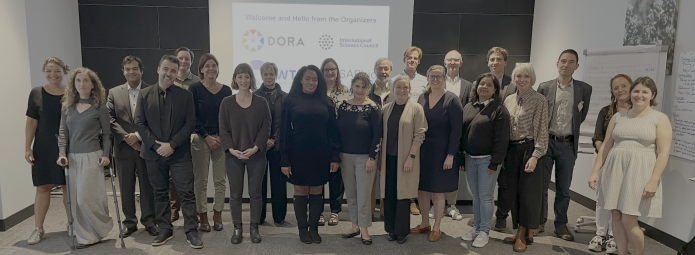
Congratulations to HHMI for recognizing preprints as a valid measure of scientific productivity for HHMI investigators! 👏 As one of ASAP’s regional ambassadors, I remember the early days when it was quite a challenge to encourage scientists in our region to share their preprints and start open conversations with peers across the globe. It’s truly inspiring to see leading institutions like HHMI embracing this forward-thinking approach. Open science is gaining momentum — and it’s so gratifying to witness this shift! 🌍🔬